
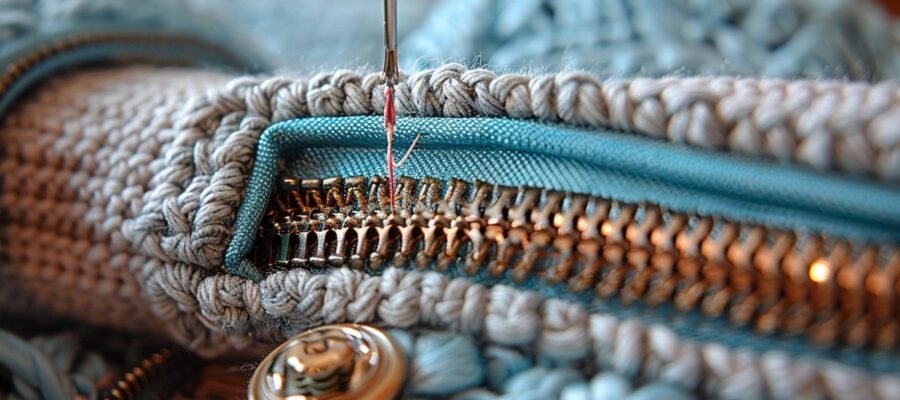
Are you tired of never being able to sew a zipper perfectly? I will reveal the five steps I follow to obtain an impeccable result. You don’t need to be a sewing expert: just follow these few tips to master the art of zipping.
Step 1: Prepare the material and fabric
Before starting, it is essential to gather all the elements necessary to sew a zipper:
- The zipper of the right length and type (invisible or classic)
- The fabric on which the zipper will be sewn
- Thread to match the fabric and zipper
- A sewing machine, equipped with a special zipper foot
- Pins
- A serger
- Chalk or erasable marker to mark the fabric
Now that everything is ready, remember to leave an adequate seam allowance on the fabricusually 1cm wide. It is essential to have an even seam allowance to obtain a clean and precise result.
Step 2: Mark the location of the hinge
Start by marking where you want to sew the zipper onto the fabric. Because of this, Mark both edges of the fabric with an erasable marker or chalkmaking sure to stay within the seam allowance. Also remember to mark the location of the bottom of the zipper so you know how far to sew.
Trick :
If you want the zipper to be invisible you can make a template, which is a small piece of fabric sewn between the zipper and the main fabric. The shape prevents hair and clothing from getting caught in the zipper when it is closed.
Step 3: Baste the zipper in place
Once you have marked the location correctly, you can place the zipper on the fabric. Make sure it is well aligned with the marks drawn previously and secure it with pins. After, build the zipper by making some stitches by hand so that it does not move while machine stitching.
This step is essential because it guarantees that the zipper does not slip during machine stitching and that the result will be flawless.
Step 4: Sew the zipper
Now that the zipper is securely fastened in place, it’s time to move on to machine stitching. To do this, equip your machine with a special zipper foot, so you can sew as close as possible to the zipper teeth without damaging them.
Start stitching on one end of the zipper and continue sewing a few millimeters from the closing teeth, respecting the margin traced previously. Be careful not to go too fast, and don’t hesitate to use your machine’s stitch-to-stitch function if it has one.
Trick :
When you reach the bottom of the zipper, stop a few centimeters before turning the fabric 90° and making a few perpendicular stitches to solidify the seam and prevent it from tearing.
Step 5: Check the result and finish sewing
After sewing the zipper, take the time to check that the result is well aligned and clean. If not, use the seam ripper and repeat steps 3 and 4 until you get a flawless result.
Once you are happy with the sewing, finish folding the excess fabric inward and sewing a few invisible stitches by hand to hold the fabric in place. Next, open the zipper to check that it is working properly and voila, the zipper is now perfectly sewn!
By following these 5 steps and applying the tips mentioned, you will know how to accurately sew a zipper onto any fabric, making your sewing projects much easier in the future! Furthermore, you can adapt these tips to different types of zippers (invisible, classic) and get equally good results.
About the author

Recent articles
To feel good about your clothes and have confidence in yourself, you need to have a well-stocked wardrobe. Dresses are essential elements of a woman’s wardrobe, but…
Sewing is a passion for many, but it can quickly become expensive. That’s why I offer you here a complete guide to finding free sewing patterns in…
Welcome to the exciting world of women’s coat designs! If you’re like me, admiring a beautiful coat always makes you want to start sewing…
Latest posts

How to wash, dry and care for bedding?

Curtains are an exclusive highlight of home interiors

Restless children’s sleep

Satin care: tips and guidelines
Why are satin bedding sets so popular?

Home textiles for sensitive skin
How to choose a dress model?

Baby blankets: why are they important and how to choose them?

Herbs: Natural Ways to Improve Sleep