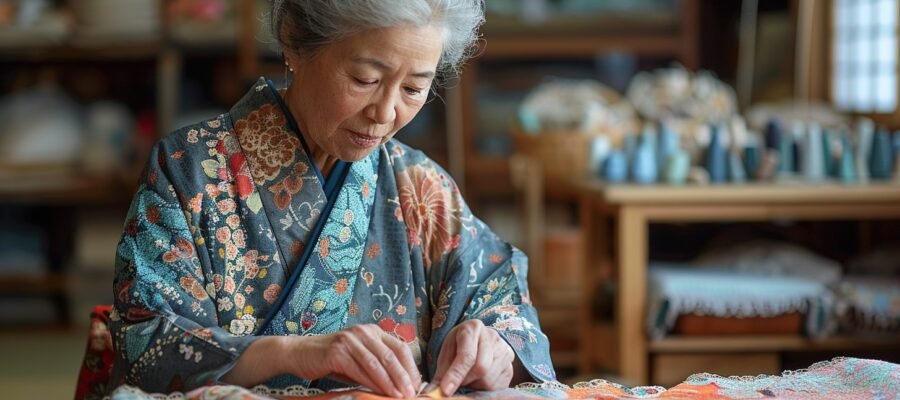
Have you always dreamed of creating your own personalized kimono? Whether you are a beginner or an experienced seamstress, this guide is for you! I’ll show you how to create a custom sewing pattern and give you all the sewing tips you need to make an elegant and comfortable jacket.
Preparing the kimono project
Choose the right fabric
The choice of fabric it is essential to making a successful kimono. Opt for fluid and light fabrics such as:
Consider the season and occasion when choosing fabric.
Prepare your workspace
A good sewing workshop must be well organized. Make sure all necessary supplies are on hand:
- Graduated ruler
- Sewing scissors
- Tingling
- Sewing machine
- Iron
Organizing your space will make every step of the creative process easier.
Make the kimono pattern
Take your measurements
Before starting, it is essential to take precise measurements. Here are the main measures to note:
- Chest measurement
- Life
- Arm length
- Desired total height of the kimono
Note these measurements carefully as they will determine the accuracy of your model.
Trace the basic pattern
To trace the pattern, use kraft paper or special pattern paper. Follow these steps:
- Draw a rectangle representing the length and width of the kimono.
- Add sleeve openings to the top two ends of the rectangle.
- Draw the collar in the center of the top of the rectangle, leaving just enough opening for the head to fit through.
Don’t forget to mark the hems and seam allowances.
Check and adjust the model
Before cutting the final fabric, make a prototype using a test fabric, such as old curtains. This will allow you to correctly fit the model to your measurements. Once you’re happy with your prototype, you can cut the final fabric with confidence.
Kimono sewing steps
Cut the fabric
From your validated template, pin it onto your chosen fabric, then carefully cut along the traced lines. Be sure to keep the seam allowances added when creating the pattern.
Assemble the main parts
Start by assembling the large body parts. Follow this timeline:
- Assemble and sew the front and back shoulder sections.
- Sew the side seams, making sure to leave enough room for the armholes.
Use strong straight stitches and regularly check that the seams are straight.
Sew the sleeves
To sew the sleeves, follow these steps:
- Fold each sleeve in half, right sides together, then sew along the outside edge.
- Then attach the sleeves to the main body, making sure the seams fit together perfectly.
Consider switching to a thinner seam for optimal movement comfort.
Finishes and hems
A beautiful finish gives a professional touch to your creation. Iron the seams flat before continuing. Let’s proceed with the hems:
- Bottom hem: double, fold and then sew carefully
- Front opening: finish with bias tape or lining for a neat aesthetic
An iron will be your best ally for obtaining clean and precise edges.
More tips for kimono success
Personalization and decoration
Give free rein to your creativity by customizing your kimono. Some ideas:
- Delicate embroidery on the edges
- Colorful applications for a unique effect
- Added practical pockets
These personal touches will make your kimono truly unique.
Find inspiration
If you need inspiration, be sure to consult fashion magazines or blogs that specialize in sewing tutorials. You’ll find out various styles which could stimulate new ideas for your project.
Avoid common mistakes
Some tips to avoid common mistakes:
- Read the sewing guide carefully before starting
- Don’t overlook the importance of suitable needles (depending on the type of fabric)
- Always test your stitching on a sample before working on the final fabric
These precautions minimize the risk of problems and ensure a satisfactory end result.
Finalize and maintain your kimono
Wear and style your kimono
A kimono can be worn in different ways depending on the style you are looking for. For a casual look, combine it with jeans and a t-shirt. Are you going to a fancy party? Wear it over an elegant dress for a guaranteed glamorous effect.
Maintain your kimono
The last tip, but not least, concerns the maintenance of your kimono. How you care for your jacket will affect its lifespan:
- Hand wash or by machine according to the fabric manufacturer’s recommendations
- Iron at low temperature to preserve the integrity of the fibers
By following these simple care rules, your kimono will remain the highlight of your wardrobe for a long time.
About the author

Recent articles
To feel good about your clothes and have confidence in yourself, you need to have a well-stocked wardrobe. Dresses are essential elements of a woman’s wardrobe, but…
Sewing is a passion for many, but it can quickly become expensive. That’s why I offer you here a complete guide to finding free sewing patterns in…
Welcome to the exciting world of women’s coat designs! If you’re like me, admiring a beautiful coat always makes you want to start sewing…
Latest posts
How to wash, dry and care for bedding?

Curtains are an exclusive highlight of home interiors
Restless children’s sleep
Satin care: tips and guidelines

Why are satin bedding sets so popular?
Home textiles for sensitive skin
How to choose a dress model?
Baby blankets: why are they important and how to choose them?

Herbs: Natural Ways to Improve Sleep