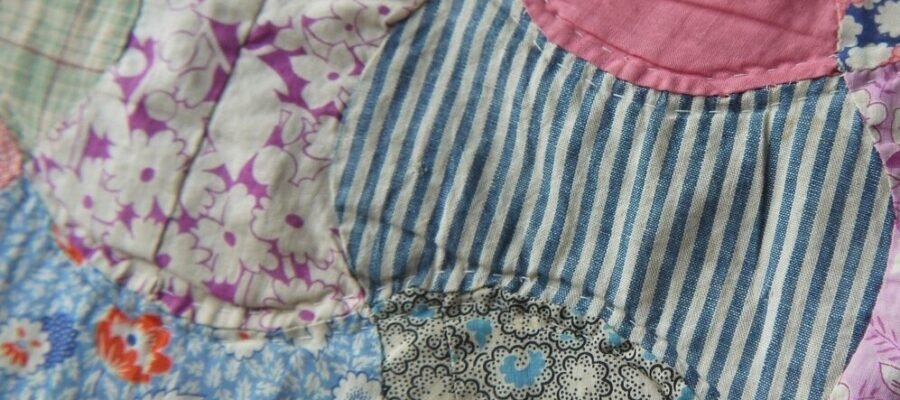
Quilting is a different embroidery technique that allows you to create quilted products that usually have three layers. In addition to traditional needle stitches, various applications and embroidery can also be used here.
You can create unique quilts, clothes, children’s toys or even paintings from quilting, but if you look back, traditionally this principle was mainly used to sew various brightly colored bedspreads and bedspreads. Such a job required one to three months of work. The duration of creating a craft item mainly depends on the experience of the creator, the difficulty of creating the ornament and the number of different patches.
A garment of this type is created from a main top layer and a lining, which is usually cotton, with a polyester fill in between, which creates visual volume. It’s like a three-dimensional work of art. The top layer, which is the main essence of all this craftsmanship, is made up of different fabric patches, which differ in color, pattern and sometimes even in the type of materials. The essential element of this piece are the stitches created by the needle.
The prehistory of quilting
Quilting is far from a newly invented type of embroidery. In many cultures this activity was part of women’s free time. We can find their legacy in ancient Egypt and even in the East, in China itself. Historians believe that quilts appeared on our continent during the Crusades, when soldiers marched into Palestine in the 11th century and brought back not only jewelry, but also quilts created by women’s hands. At that time, people could see quilts in the form of flags, religious clothing, tents, blankets and other items. Many people believe that in the Middle Ages quilting was only an occupation of the lower classes, but there is evidence that Mary Stuart, Queen of Scots, also worked on this sewing principle.
The oldest Lithuanian quilt belongs to the mother-in-law of the artist A. Žmuidzinavičius Idalija Plioteryte, who lived in the years 1837-1886. This work of art is now stored in the MK Čiurlionis National Art Museum.
Nowadays, quilting is experiencing a renaissance of its own, with more and more people getting involved in this enchanting activity. Maybe people don’t sew flags anymore, but you can find quilting in the form of various clothing, decorative and household items, and other works of art. In our country there are hundreds of people engaged in this activity: in the city of Utena there is even a women’s quilting club called «Vorė».
What does the quilting process look like?
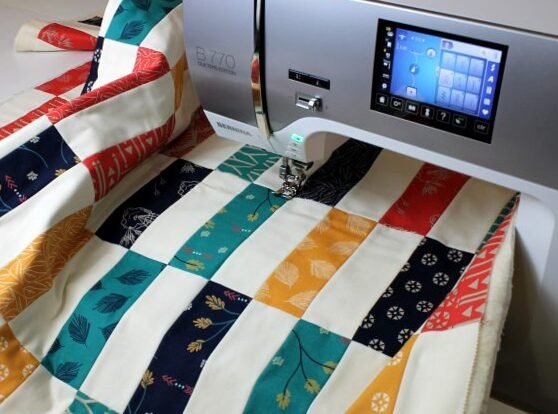
As we have already found out, this is an age-old craft that is created from scraps of different fabrics, connecting them with needle stitches. It is like a work of art that can only be created by people with patience and diligence. Quilting can be done by hand or with the help of a sewing machine, although people often combine these methods with each other.
Before getting into the technical aspect of quilting, it is worth pointing out that when undertaking quilting of any level of complexity, you must first have a sketch or at least a clear picture in mind of how the different quilts should be placed together. You should also decide which quilting method you want to use, as there are several. The third thing, no less important, is to collect the materials, wash them and iron them: this way you will make your work much easier. Well, the last job before the start of creating a work of art is to cut the patches, transforming them into various geometric shapes.
And now let’s move on to the technical part of the quilting process
As mentioned above, this craft is made up of three different layers. The first top layer is created by combining several layers of materials that can create a variety of geometric shapes or other ornaments. The central one is usually filled with a thicker material, which often has a warming function (especially if it is a blanket). Well, the last layer is not very important in this craft: it is like a lining, which is usually made of cotton fabric due to its practical properties: easy to clean, tidy and durable. All these layers are connected with the help of dots, which adapt to the ornament you are creating or add an extra touch to the work. To make the quilt even more unique, the most experienced seamstresses take and embroider their newly created work of art.
Tools and materials required
The main tools for quilting are, without a doubt, needle and thread, but in addition to these, a beginner should prepare some other useful tools to create this craft. To cut fabric patches you will need quality tailor’s scissors that will not damage the material, or a professional fabric knife. By the way, the latter should be sold with a special rubber mat, which has linear markings – a guide for the tailor. A wide ruler, a thimble for your safety, and plenty of pins will also come in handy for quilting. In addition to the various patches, you will also need to prepare threads of contrasting hues to help create a truly unique work of art.
For this work you will also need a filler of the thickness you prefer, various scraps of fabric, an iron and a sewing machine (if you know how to work with it and want to simplify the task for yourself). Special crayons, a pencil or a bar of soap, adapted for sewing work, will certainly facilitate the marking process.
What are the best materials for quilting?
As for the fabrics of the quilts themselves, it is better to choose materials of the same density and harmonious shades. But nowadays, with the growing popularity of the zero waste principle, many people use what they find at home, so it is not always possible to follow the rule of equal density of materials. Even if you don’t have fabric to make at home, you can always buy it for less because this craft only requires scraps and we at Must Have can offer a wide variety of fabric scraps for less.
Many experts in this craft confidently recommend using only 100% cotton fabrics, since cotton is a natural material of plant origin, which has many practical properties, such as strength, durability, ease of maintenance, etc. Usually there are no requirements for the lining itself, but for practical reasons it is also better to choose cotton fabrics. The color or pattern isn’t very important, but if you want the piece to look harmonious and fully finished, you’ll want to choose a solid color material that matches the dominant colors of the quilts.
Even if you don’t have many practical skills, a good part of the theory is already here, so all you have to do is take scissors in your hands, cut out geometric shapes and with the help of a needle connect them harmoniously to each other into an extremely fascinating work of art that will not leave you indifferent.
Latest posts
How to wash, dry and care for bedding?

Curtains are an exclusive highlight of home interiors
Restless children’s sleep
Satin care: tips and guidelines
Why are satin bedding sets so popular?
Home textiles for sensitive skin
How to choose a dress model?
Baby blankets: why are they important and how to choose them?
Herbs: Natural Ways to Improve Sleep