Embroidery is an ancient art that has spanned the centuries and continues to occupy a central place in creative hobbies. As an embroidery enthusiast or enthusiast, it is difficult to choose between the vast range of threads available and the various methods for creating unique works. In this article I invite you to explore together the different options for choosing colors, types of threads and embroidery techniques to guide you in your projects.
The different types of embroidery threads
Mouliné thread
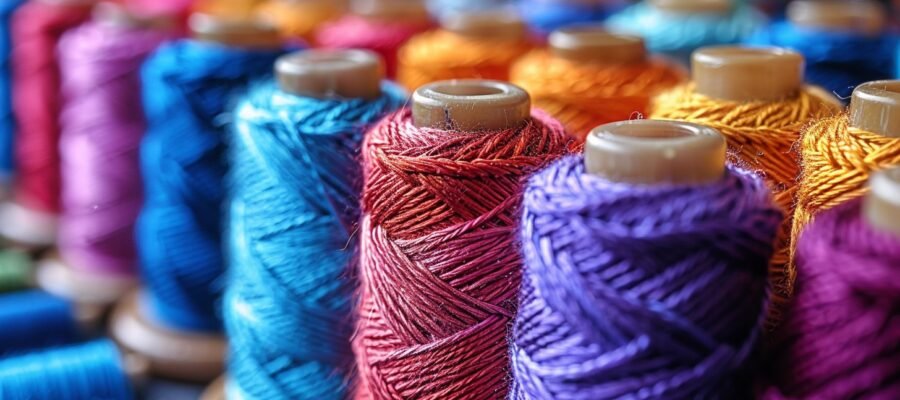
THE braided wire it is probably the most popular and most used in embroidery. This thread is made up of six divisible strands, giving you the ability to adjust the thickness of the thread to suit your project needs. It is often used cross stitch embroiderybut also for other decorative designs.
The string of beads
THE string of beads It features a twisted, non-breakable structure, making it ideal for adding relief and texture to your creations. Often used for shiny or dazzling details, it gives depth and dimension to works. Its uses are many and range from small accents to graphic designs.
Tapestry thread
This thick thread is suitable for jobs that require strength and durability. It is commonly used in canvases and other projects where a strong thread is essential. Its composition in solid threads guarantees its longevity despite intensive use.
How to choose your colors
The importance of the color palette
THE color palette plays a crucial role in achieving harmonious embroidery. You probably want the shades you choose to complement each other perfectly and highlight your design. To do this, using a color wheel helps visualize possible combinations.
Mix the tones
Think about it mix light, medium and dark tones to give depth to your embroidery. A simple method is, for example, to choose a dominant color and then associate an adjacent hue and a complementary or contrasting opacity to balance everything.
The effect of color numbers
Every yarn manufacturer offers color numbers specific ones that allow you to reproduce a shade exactly. Knowing these codes can greatly facilitate your future purchases by avoiding mismatches and ensuring color consistency between different lots of thread.
Basic embroidery techniques
Cross stitch
The emblematic technique of embroidery, cross stitch consists of forming small regular crosses with the thread, following a predefined pattern. Ideal for getting started, it allows you to create detailed images using a grid.
- Start by inserting the needle into the bottom left of the square, then bring it out to the top right.
- Then go from the bottom right to the top left, thus forming the cross.
- Continue following this pattern for the entire desired height, then returning to complete the horizontal line.
The back stitch
THE back stitch Mainly used for drawing sharp outlines on your projects.
- Start by pushing the needle forward to the next mark where it will come out.
- Go back to the last point and exit at the next mark.
- Proceed in this way later to draw the desired contours.
Points thrown
There are also various refueling points, such as points thrown. It involves embroidering directly between two stitches across various lengths, perfect for colorful spaces or fine details.
Essential tools to get started
Needles
Using the right needles is a primary choice. Embroidery needles generally have a it’s big making it easier to thread mouliné or beading thread. A aim well it is more suitable for light fabrics while a rounded tip it is preferred for canvases.
Drum
THE embroidery hoop it tightens the fabric, ensuring optimal tension during the passage of the thread. Provides better visibility and helps keep stitches consistent. Choose a drum suited to the size of your project to avoid having to constantly reposition it.
Embroidery scissors
THE precision scissors they are another must-have. Small and sharp, they allow you to cut threads cleanly and organize your work without problems. An additional pair dedicated to this task will ensure its durability.
About the author

Recent articles
To feel good about your clothes and have confidence in yourself, you need to have a well-stocked wardrobe. Dresses are essential elements of a woman’s wardrobe, but…
Sewing is a passion for many, but it can quickly become expensive. That’s why I offer you here a complete guide to finding free sewing patterns in…
Welcome to the exciting world of women’s coat designs! If you’re like me, admiring a beautiful coat always makes you want to start sewing…
Latest posts
How to wash, dry and care for bedding?
Curtains are an exclusive highlight of home interiors
Restless children’s sleep

Satin care: tips and guidelines
Why are satin bedding sets so popular?
Home textiles for sensitive skin
How to choose a dress model?
Baby blankets: why are they important and how to choose them?
Herbs: Natural Ways to Improve Sleep