Today, the internet, brochures, and magazines offer a wealth of information about overlock sewing machines. However, these articles are rarely written by professionals or industry experts with hands-on experience.
This article aims to highlight several criteria that we believe are crucial when selecting a particular overlock sewing machine model. We will provide advice and recommendations based on years of sales experience and customer feedback.
Basic overlock patterns
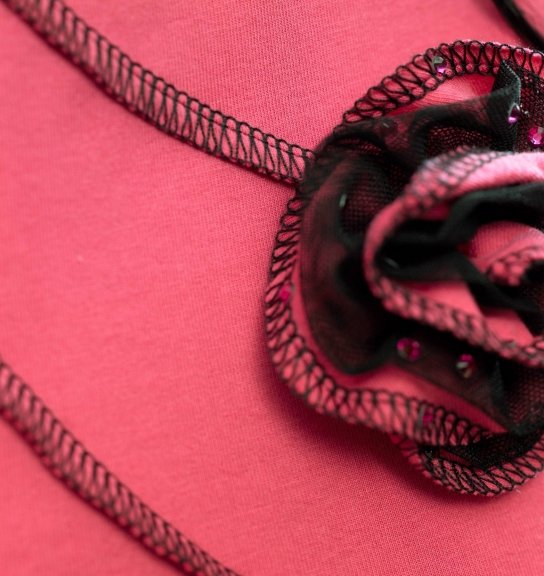
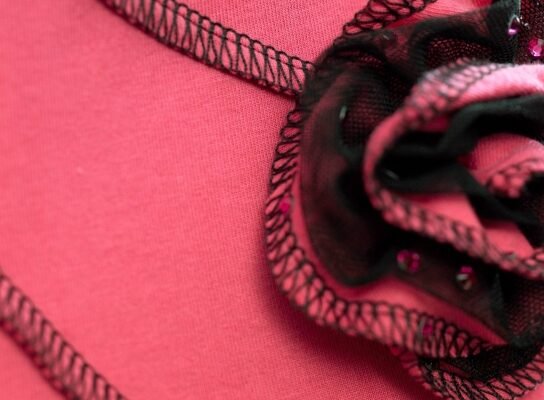
First of all, we want to disprove the widespread belief that sewing machines and sergers are the same thing. The main function of the overlocker is to cut off the unnecessary tangled edge of the fabric and process the cut area. This is done with several threads that wrap around the edge of the fabric and thus create a protective seam that prevents the edge of the piece from fraying. A serger is also used to join parts of a product (for example, armpit seams). Therefore, the overlock simultaneously cuts the excess fabric, joins the parts and overcasts the edge. In addition, some overlockers are combined with satin stitch machines – such machines are called combines. They perform not only overcasting, but also flat seams, chain stitches and decorative stitches, necessary for hems, edges and other operations.
Overlockers do not replace sewing machines, but only complement them, allowing you to perform operations that sewing machines by their design cannot perform.
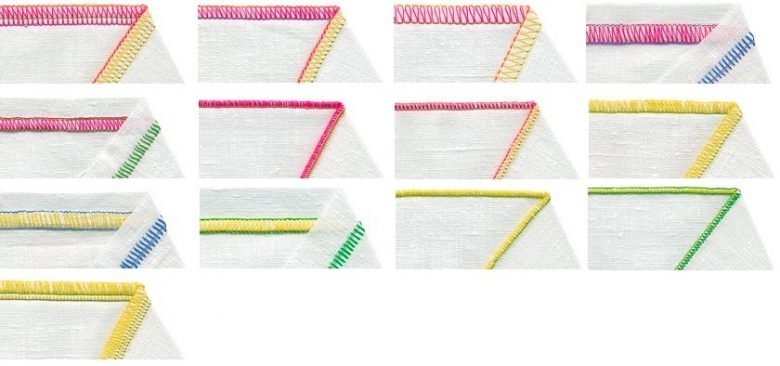
The biggest advantage of these machines is the elasticity of the seams. That’s why they are indispensable when sewing knitwear. Modern overlockers can process a product with 5 (combine only), 4, 3 or 2 threads and perform wide and narrow overlock seams. By using special presser feet, you can make tasks like gathering or sewing elastic easier.
All overlockers have a differential fabric transport system. It prevents the material from pulling when sewing elastic fabrics and makes it easier to obtain perfect seams.
The machines are easily adjustable: it is easy to set the desired thread tension, stitch density, where to finish the fabric, presser foot pressure and other settings. Everything is thought out and adapted for the modern user, so don’t be afraid to experiment and strive for perfect stitching.
All modern sergers use standard household sewing needles and sew perfectly with synthetic threads. For best results, invest in slightly more expensive threads. This way you will not only sew a higher quality product, but also simplify the sewing process. You can also use colored, silk and textured threads to make your designs personal and unique.
Lines to execute:
Information on overlock manufacturers
Now that you have a general understanding of overlockers and their capabilities, let’s talk about the major manufacturers and the machines they offer.
Rubina, Jaguar and Janome
Today Rubina, Jaguar and Janome offer a wide range of overlockers on the market. These companies are famous all over the world in the field of overlock production. Overlockers from these manufacturers offer the best value for money. They handle all standard overlock stitches and are great for home sewing. If you plan to use a serger for your home needs, we recommend choosing sergers from these manufacturers – you definitely can’t go wrong.
BERNINA
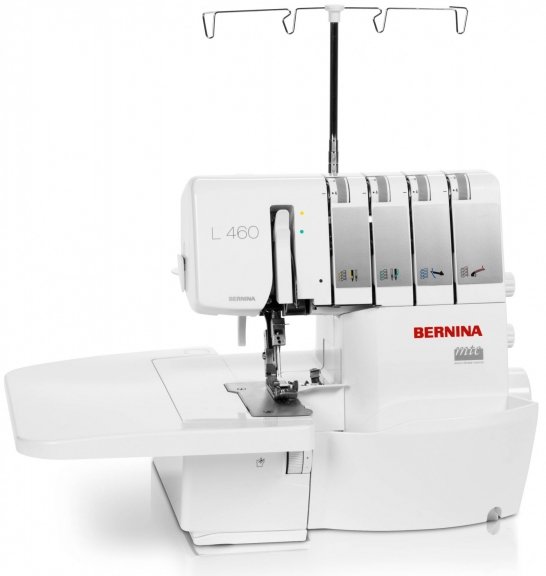
Customers who appreciate impeccable quality and ease of use often choose a top-tier manufacturer – BERNINA (Switzerland).
Overlockers from this manufacturer are characterized by particularly precise adjustment of the thread tension. The machines use an improved blade design for cutting material: the blade has a separate guide motion from top to bottom. This device ensures a significantly longer service life of the knife and ensures high-quality cutting of the material, especially when sewing knitted and very loose fabrics. These advantages make the seams performed indistinguishable from the professional ones found on clothing purchased in the store.
All BERNINA overlocker models are particularly quiet. These overlockers can easily handle both very thin and thick fabrics (e.g. denim).
 |
Types of overlockers
4 and 3 thread home overlockers
Most often, the edge is covered with 4 threads (2 needle threads and 2 lower loop threads) or 3 threads (1 needle thread and 2 lower loop threads). Some models have the ability to switch to 2-thread sewing mode, for example BERNINA L450 or RUBINA 840D. This is done using a special additional device (looper plug). What is it? This is a small metal hook that fits into the top (right) hook outside of your pants. Why is it necessary? This converter looper is needed as an intermediary between the lower loop thread and the needle thread. In other words, it grabs the bottom loop thread and transfers it to the needle, resulting in a two-thread stitch.
All modern models from any manufacturer can perform a very similar number of overlock stitches. Moreover, they have all the same functions: adjusting the presser foot, turning off the knife, differential fabric feed, adjusting the knife, switching to a narrow seam and adjusting the stitch density. As you can see, the main difference between overlockers is not in functionality, but in the quality of assembly and components.
5-thread household sergers (combine harvesters)
If you want the machine to simultaneously overcast the edge of the fabric and do a chain stitch next to it, only 5-thread combinations that combine both an overlocker and a coverstitch machine can do this. Such machines are capable of performing not only standard overlock operations, but also complex knitted seams. The coverstitch machine’s features are especially useful when hemming and edging.
Domestic 5-thread combines (for example: MERRYLOCK 3560CL, RUBINA L10A, JUKI MO-735) perform all possible overlock and flatlock seams. Due to their more complex design and advanced features, these machines are more expensive than regular overlockers.
The combine performs not only regular overlock stitches, but also flatlock stitches and 5-thread stitches:
It is also worth considering the option of two separate machines – it is a little more expensive, but much more convenient. With a separate serger and separate coverstitch machine, you don’t have to worry about switching between functions. True, in this case you lose the opportunity to perform 5-thread operations, since both overlockers and satin stitch machines are only 4-thread.
We hope this article was helpful to you. You will find more detailed information on each model in the relevant product sheet. You will find all the sergers and combine harvesters sold Here.
Latest posts
How to wash, dry and care for bedding?
Curtains are an exclusive highlight of home interiors
Restless children’s sleep

Satin care: tips and guidelines
Why are satin bedding sets so popular?
Home textiles for sensitive skin
How to choose a dress model?
Baby blankets: why are they important and how to choose them?
Herbs: Natural Ways to Improve Sleep